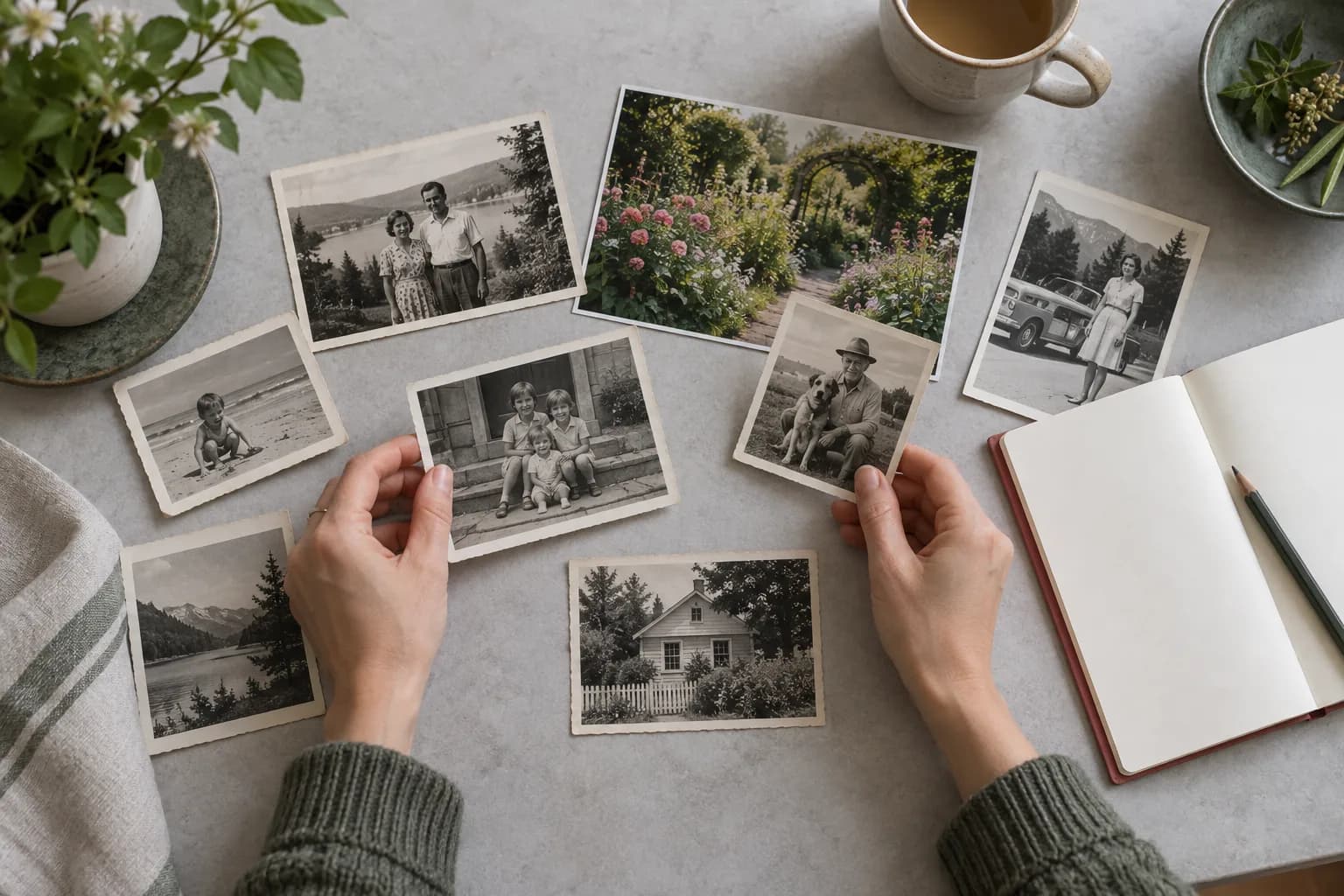
4 min read
How to Summarize a Family History Interview
Write a family history interview summary by outlining the main topics and indexing names or subjects to help relatives easily locate specific recorded
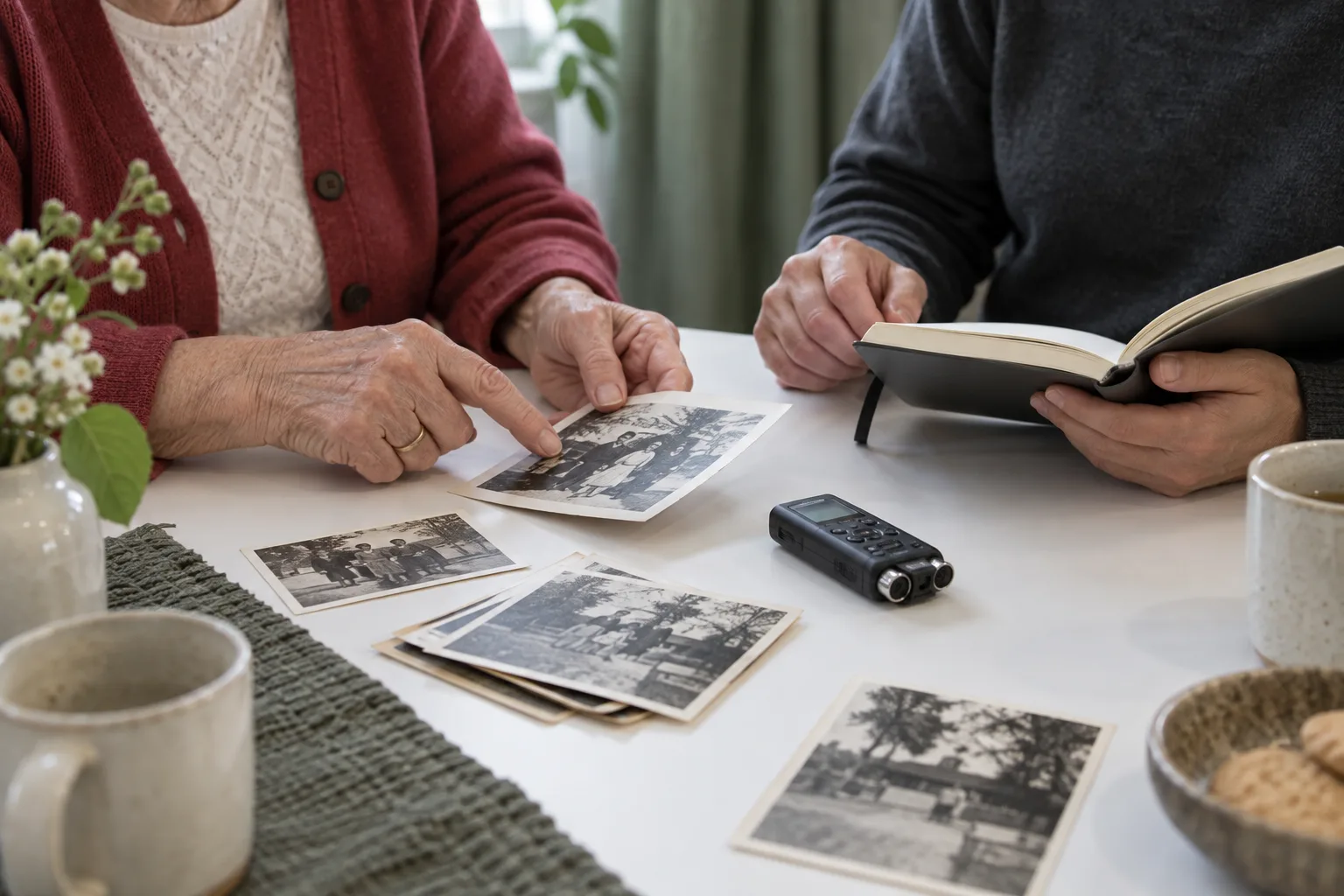
To summarize a family history interview, write a brief chronological overview of the topics discussed and create an index of names and subjects. This allows relatives to locate specific stories later without listening to the full recording. Group the summary by themes like childhood homes, meals, or employment.
Outlining the interview and indexing names
The Smithsonian Institution Archives notes that generating a written summary alongside a list of names and subjects is necessary for identifying a recording's contents later (https://siarchives.si.edu/history/how-do-oral-history). A useful outline categorizes information by specific oral history themes. For example, a summary might group details about furnishings, specific rooms, and changes of home or neighborhood under the topic of childhood homes (https://siarchives.si.edu/history/how-do-oral-history).
When reviewing the audio, index the practical details. Document who cooked the meals and who helped afterward under food-history topics (https://siarchives.si.edu/history/how-do-oral-history). Work-history subjects can organize recollections about a first job, the routine of typical days, and any influential mentors (https://siarchives.si.edu/history/how-do-oral-history). Organizing these subjects sequentially makes the resulting document functional for relatives attempting to isolate a specific name or event from the recording.
Documenting the unphotographed details
MemoryFrame turns a submitted photograph and a written text into a single piece of framed artwork. The best part of a memory is frequently not in any photograph. What people said, what went wrong, and the joke nobody photographed are the material worth writing down.
When evaluating test scenarios during product design, we identified a specific limitation with unrecorded events. In one scenario, the funny stories from the puzzle are the best content in the set and are not in any photograph. There is currently nowhere to put them. Transcribing unrecorded moments like these from your audio into your text summary is necessary to include them on the finished piece. You can review how to record the story behind a family photo to help structure the spoken recollections as you write.
The strict limit of the written record
Only what you actually write reaches the finished piece. Nothing infers a story from an image, so an anecdote that is left in your head stays there. If a detail from the audio recording is not transcribed into your summary notes, it cannot be included in the final artwork.
Be thoroughly literal when typing out the transcription. If a narrator describes a specific object during the interview, it must be typed out in full to appear in the printed text. If you are gathering material from multiple relatives before finalizing the text, review how to ask people to send a photo and a memory to coordinate their contributions.
Preparing facts before the interview
A functional summary starts before the conversation. Prepare relevant photographs, verify correctly spelled names, and write down a basic chronology before the interview begins (https://siarchives.si.edu/history/how-do-oral-history).
Explain the project's intended use to the narrator. Make sure they understand that they may decline questions or stop the recording at any point (https://siarchives.si.edu/history/how-do-oral-history). During the session, ask open-ended questions one at a time. Avoid leading questions and focus strictly on first-person recollections rather than second-hand accounts (https://siarchives.si.edu/history/how-do-oral-history). Recognizing that family history is a person not a chart keeps the interview grounded in direct experience. Leave space for pauses and follow-up questions to gather accurate information (https://siarchives.si.edu/history/how-do-oral-history).
Securing the full recording for context
A written summary functions as a guide to the original audio, not a replacement. To record clear audio for transcription, choose a quiet space, test your recording levels, and avoid talking over the narrator (https://siarchives.si.edu/history/how-do-oral-history).
While smartphones can record MP3 audio easily, an uncompressed WAV recording is preferred for long-term archiving when that format is available (https://siarchives.si.edu/history/how-do-oral-history).
The resulting audio files remain the primary reference. The text index and summaries you build from them direct relatives to the correct section of the recording.