2 min read
A sympathy gift when the loss is not yours
A sympathy gift is not a memorial one. You are giving to somebody whose loss it is, which means the photograph and the story have to be theirs, not yours.
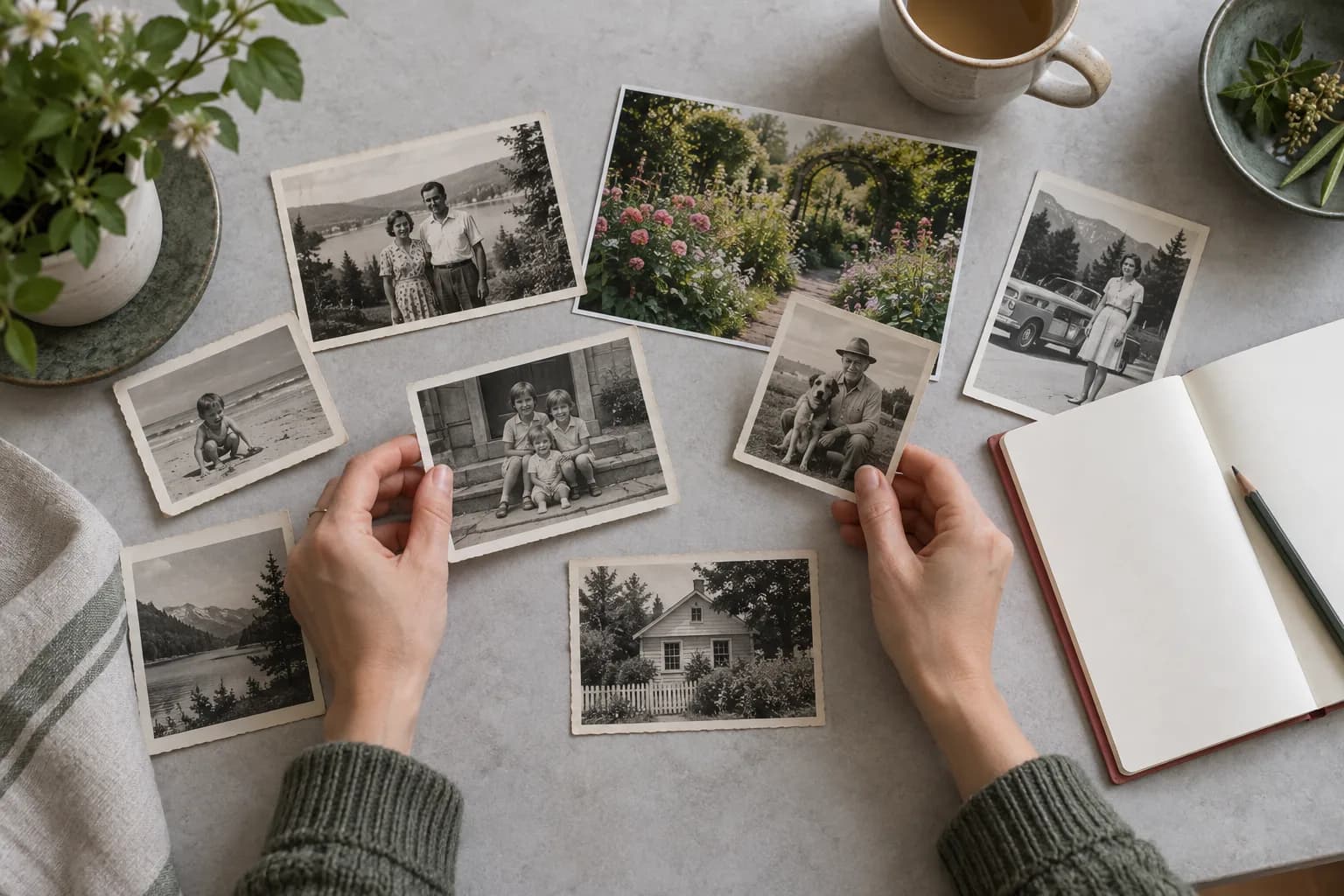
A sympathy gift is a different object from a memorial one. You are giving to somebody whose loss it is, which means the photograph and the story have to be theirs rather than yours.
In practice that means asking them, which is the part people hesitate over.
Why asking beats choosing
The hesitation is understandable — you do not want to make somebody look through photographs in a bad week, and there is a fear that asking turns a gift into a task.
It lands better than the alternative. Choosing for them means guessing which version of a person they want on a wall, and you are guessing with less information than anybody in that household has. There is nearly always a picture the family has already settled on without discussing it: the one that gets used, the one on the order of service.
Asking finds it in one message. Guessing does not find it at all.
How to ask without making it a job
Keep it to one question with a low floor. Is there a photograph of him you'd want on a wall? No rush, and no is a fine answer.
The last clause matters. It gives them somewhere to go that is not the task, which paradoxically makes them more likely to answer rather than less.
If several of you are contributing, one person should do the asking. A grieving household fielding four separate messages about the same photograph is a cost you can remove for them.
What not to write
Not your account of the person. That is the most common instinct and the one to resist — a sympathy piece carrying the giver's memories is subtly about the giver.
Whatever they write is what appears. If they write four flat sentences, four flat sentences is correct. More on why in nobody should tell you what you are feeling.
Timing
There is no window. Something arriving three months later, when the cards have stopped and the house has gone quiet, is frequently better received than something in the first fortnight.
The practical side is in how to commemorate someone who has died.
MemoryFrame
Make something from the photograph that matters
Bring your photograph and its story to MemoryFrame to begin a piece of artwork.
Start your MemoryFrame