3 min read
Can a photograph of an empty room be a memorial?
Yes, and it is often the truer choice. The place is what people can still see once the faces have gone soft - but the room has to be one they actually knew.
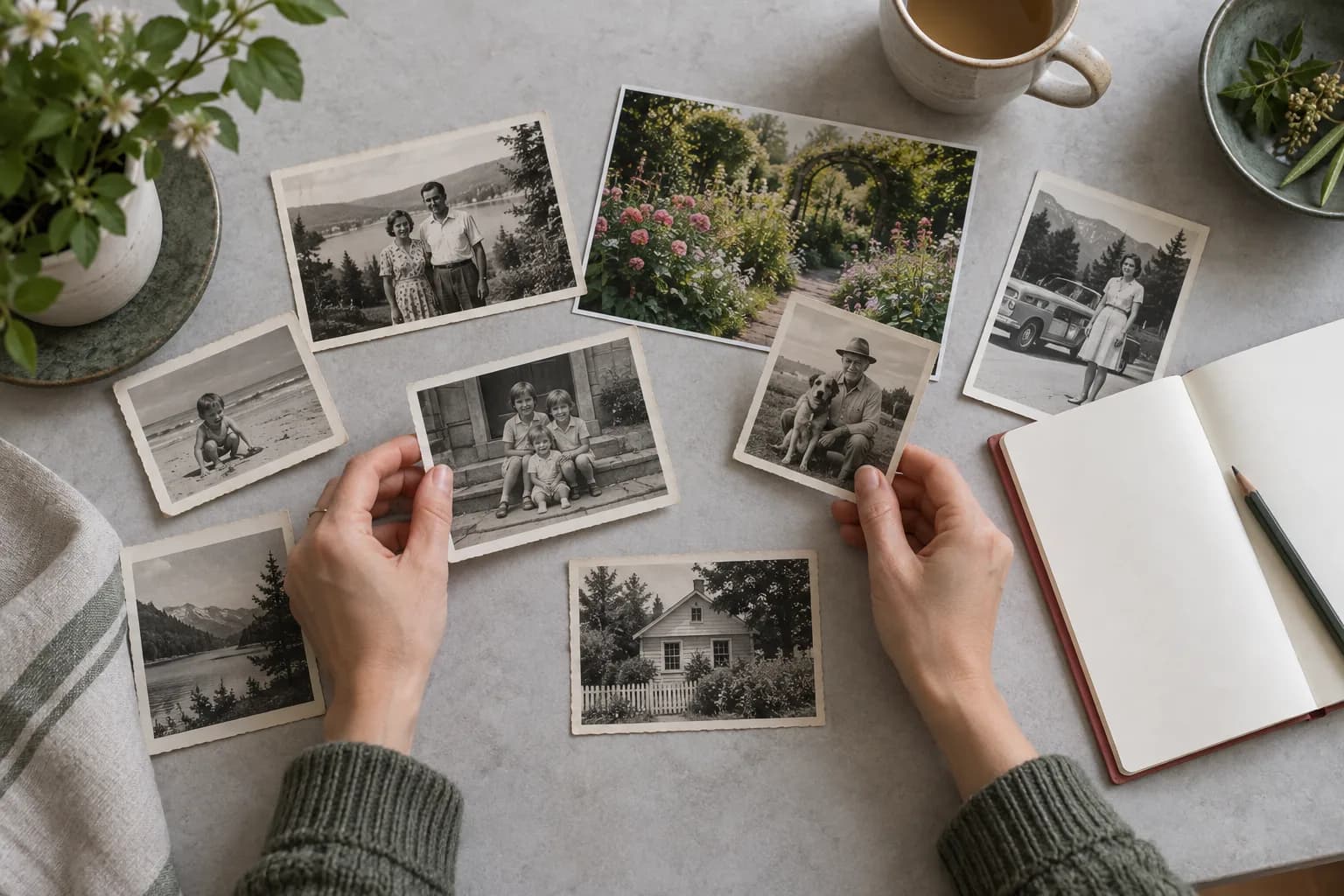
Yes. A photograph with nobody in it can carry a memory as well as a portrait does, and when a house is being sold or a parent is moving, it is frequently the truer choice. The room is what people can still see clearly when the faces have started to go soft.
The condition is that it has to be a room they genuinely knew, photographed with the things that made it theirs still in it.
Why the empty room works
Almost everything about commemorative artwork assumes a face. That assumption is wrong often enough to matter. A kitchen on Christmas morning before anyone else is up — the table with the burn mark from 1987 that nobody ever fixed, a chair at the end that stayed empty afterwards, the back door open because the oven made the room too hot even in December — is not a picture of a place. It is a picture of a family, told through the only thing that stayed still long enough to be photographed.
We treat this as a requirement rather than an edge case. A memory of a room with nobody in it has to work, and the whole thing is designed so that it does.
Where it stops working
The room has to be specific and genuinely theirs. This is where an empty-room piece succeeds or fails:
- A room with its marks left in it works. The burn on the table, the radio on the windowsill, the chair nobody moved.
- A tidied room usually does not. Cleared for the estate agent's photographs, it has nothing left to hold onto, and the result reads as a stock picture of a kitchen.
- A room the person did not know does not work at all, however handsome it is.
If the only photographs you have were taken to sell the house, they are probably the wrong ones. An older, worse snapshot with the clutter still in it will make a better piece.
The register matters as much as the subject
A piece bought in grief must not be handled as a celebration. If the result comes back festive when the memory is an elegy, that is a fault in the piece, not a stylistic preference — and it is the failure we design hardest against, because these are frequently bought at the worst possible moment. Two days after a sale completes. The week a house is emptied.
The corollary is that we try not to tell you what you are feeling. You describe the room in your own words; nothing here will relabel it for you.
A practical note on size
Rooms tend to want space. Interiors carry more separate things that need to stay legible than a portrait does, which is why this case usually points toward the larger Heirloom — provided the source photograph can genuinely hold that size.
MemoryFrame
Make something from the photograph that matters
Bring your photograph and its story to MemoryFrame to begin a piece of artwork.
Start your MemoryFrame