2 min read
Why a remembrance piece works on a wall
It is in the room the family is already in, and it asks nothing of anybody - no visit, no anniversary, no occasion. It has to be the right register.
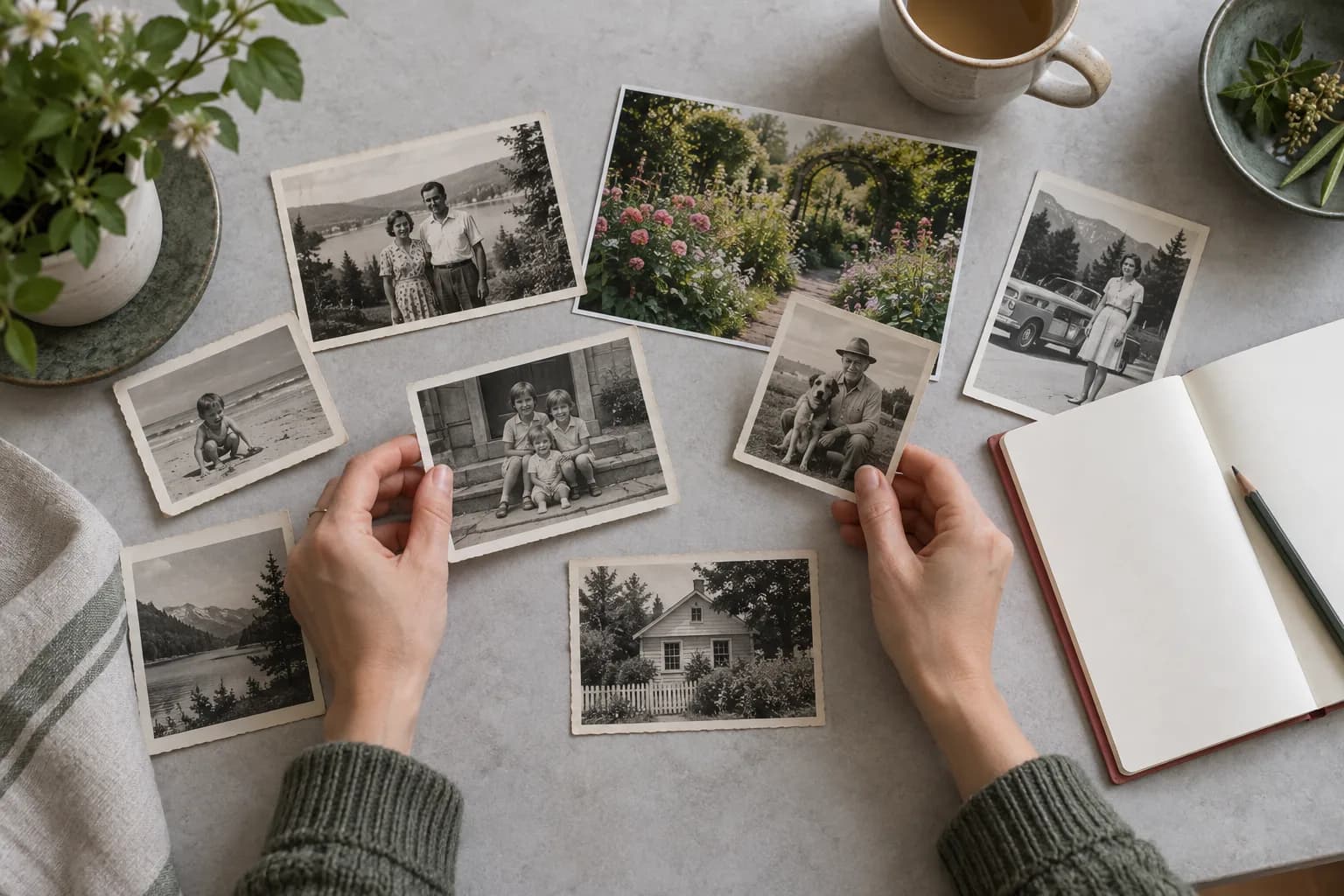
A remembrance piece works because it is on a wall where the family already is. It asks nothing of anybody — no visit, no date, no occasion — and it is looked at or not looked at as people feel like it.
That is a different thing from a grave, and for a family spread across several places it is frequently the only shared object that exists.
What "asks nothing" means
Most forms of remembrance require an act. Going somewhere. Marking a date. Deciding, each year, whether this is the year you do the thing.
An object on a wall requires none of that. It is in the room during an ordinary Tuesday, and the encounter with it happens on its own schedule rather than on a calendar's. People report noticing it for weeks and then, one evening, actually looking.
That is the correct behaviour rather than a limitation.
Distance is the usual reason
Families are spread out, and a grave is in one place — often the place the fewest people live. A daughter three hundred miles away has no version of the ritual available to her that does not involve a day's travel.
Something on her own wall is not a substitute for the grave. It is the thing she has, which is a different and more useful category.
The register has to be right
This is where these go wrong. Handled with the instincts of a celebration — warm light, generous composition, a certain brightness — the result reads as festive, and for this buyer that is a fault in the object rather than a matter of taste.
The register is set by what the family writes, which is why plain sentences about a difficult thing are the most useful material there is. More in a piece bought in grief should not read as a celebration.
When there is no photograph of the person
A room can carry it — a kitchen, a workshop, a chair by a particular window. The place is often what people can still see clearly once the faces have started to go soft.
Can a photograph of an empty room be a memorial covers that case in detail.
MemoryFrame
Make something from the photograph that matters
Bring your photograph and its story to MemoryFrame to begin a piece of artwork.
Start your MemoryFrame