2 min read
Why You Must Keep Original Photos After Scanning
Keep original photos after scanning. Learn how to handle, protect, and store the prints using National Archives and Library of Congress guidance.
You must retain your original physical items after digitizing them because digital files have inherent preservation risks and can potentially be lost National Archives.
Why keeping original prints is necessary
Creating a digital copy of an original photograph protects the physical item from the damage that can be caused by frequent physical handling National Archives. However, you must still retain the physical originals after digitizing them to mitigate the preservation risks and potential loss associated with digital files National Archives.
Handling and scanning originals safely
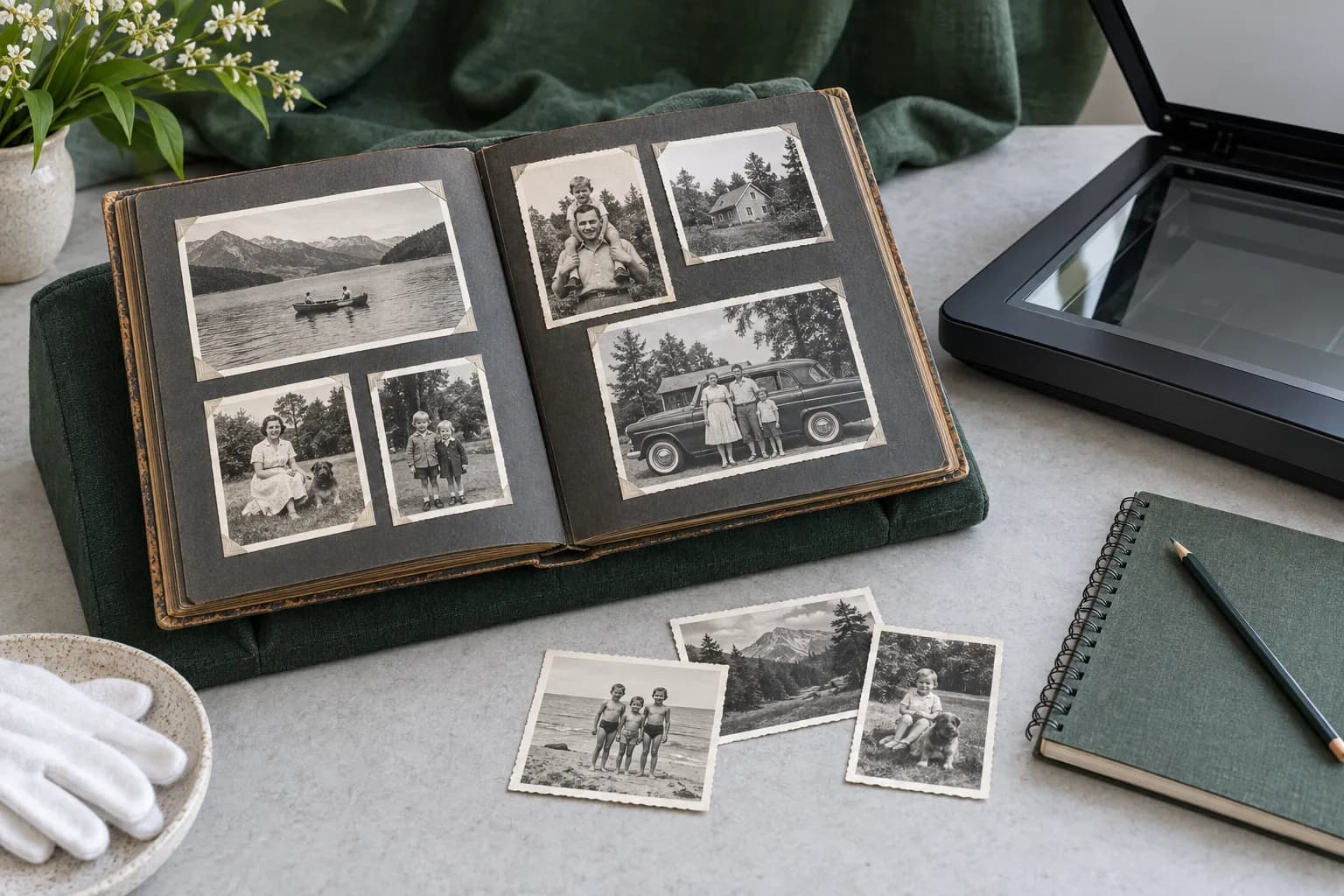
Whenever you must handle the physical photographs, you should wear clean nitrile gloves or ensure your hands are completely clean Library of Congress. To avoid physical damage during the digitization process, the photograph must fit entirely on the scanner's surface so the lid does not crush it National Archives. As a practical suggestion, consider grouping your photographs by size before you begin scanning to ensure you do not accidentally place a large print on a scanner bed that is too small for it.
Shielding prints in protective enclosures
Retained original photos require primary protective enclosures, such as sleeves or folders, to shield them from direct handling, light exposure, and dust Library of Congress. As a practical suggestion, write descriptive labels on the outside of these folders so you can easily identify your family materials later without unnecessarily touching the photographs inside.
Choosing a secure storage environment
To protect your kept originals from water, insect, and rodent damage, do not store them in your garage, a hot attic, or a damp basement National Archives.