3 min read
A memorial piece from the whole family
The family already holds the archive. The difficulty is that people are grieving different versions of the same person, and one picture goes on the wall.
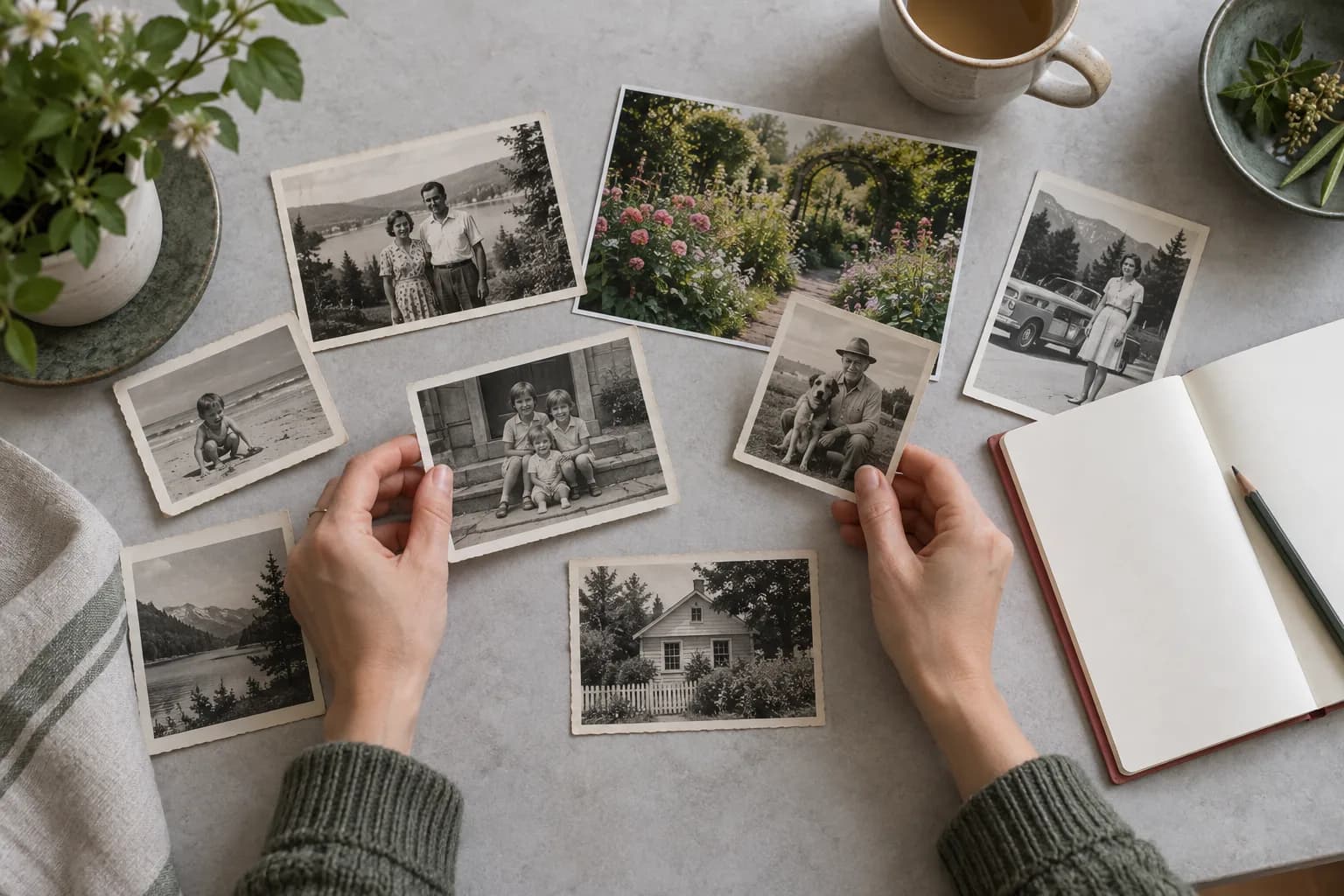
A family is the one group that already holds the archive. Nobody has to be asked whether a photograph exists — the shoebox is in somebody's loft, and everyone knows whose.
So the difficulty is not collection. It is that people are grieving different versions of the same person, and only one picture is going on the wall.
The disagreement is the useful part
A widow, a son and a granddaughter will not choose the same photograph, and the reason is not taste. Each of them is remembering a different decade of someone, and each is right about the person they knew.
The instinct is to resolve this by picking the most neutral image — a formal portrait, often the one used at the service. It is the safest choice and usually the emptiest, because a photograph everyone can agree on tends to be one nobody has a particular attachment to.
A better method is to ask each person what they would want written under a picture, before anyone chooses the picture. The sentences overlap more than the photographs do, and where they overlap is the person.
Say what he did, not what it felt like
The strongest thing on a memorial piece is specific and undramatic. He kept the 1987 diary. She answered the phone with her full name. He drove that awful green estate for nineteen years and would not hear a word against it.
The alternative is to name the feeling directly — the stock condolence phrases, the ones that appear on every card. They do the work for the reader and leave nothing to notice on the fortieth viewing. The guide on not naming the feeling covers why the undramatic line lasts longer.
Something to actually look at
Remembrance works better as an object in a room than as a folder nobody opens. A piece on a wall gets seen without being sought out, which over a year is a different relationship to a photograph than a phone gallery allows.
That is also the argument for one considered piece rather than several. The room can hold one of these.
If you are outside the family
A gift from all of us — colleagues, a congregation, a friend group — is a different problem, because that group does not hold the archive and should not be asking the bereaved to go and find it.
Take longer than feels right
There is no deadline here, whatever the funeral timetable suggests. Families often choose better three months on than three weeks on, and nothing is lost by waiting.
Heirloom is the substrate intended to outlast the people who commissioned it.
MemoryFrame
Give the occasion a story of its own
Make artwork with MemoryFrame from the photograph or story you want to celebrate.
Start your MemoryFrame