2 min read
How to Ask Permission to Record Family Stories
Explain why you want to record, where the recording may go, and what the speaker may decline before you press record. Ask separately before sharing it.
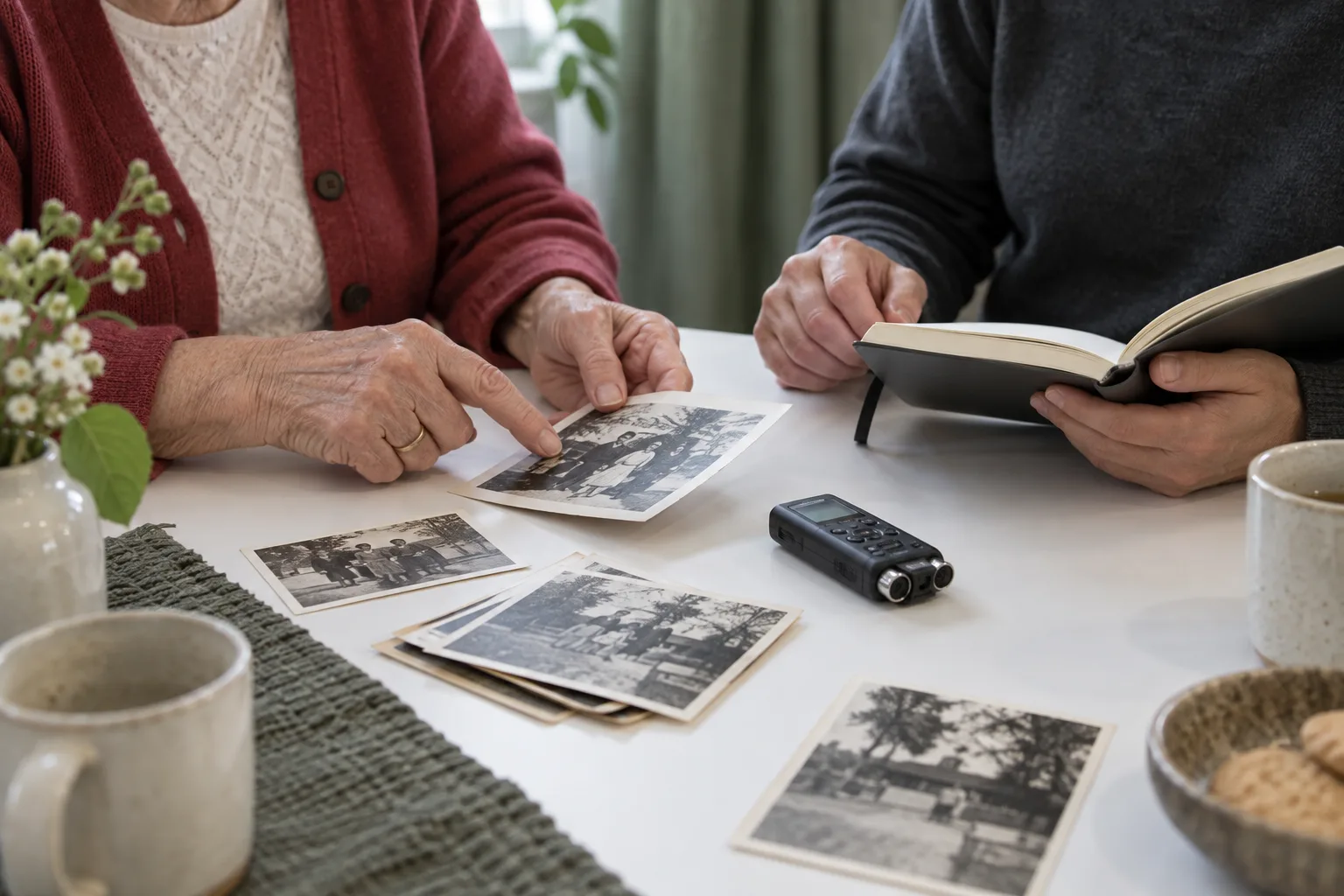
Before recording a relative's story, say what you hope to make, who may hear it, and ask whether they are comfortable being recorded. Tell them they may skip a question or stop the recorder; the Smithsonian's oral-history guide recommends explaining the intended use and those choices before an interview.
Describe the project plainly
You might say: "I'd like to record your account of these family photographs so we can remember the names and what happened. Would that be all right?" Then explain whether the recording is only for your notes, will be shared with particular relatives, or might eventually be shared more widely. These are different uses, and an answer to one is not an answer to all. The Oral History Association's best practices recommend discussing purpose, recording process, preservation, access, and possible uses before the interview.
Avoid asking for a blanket yes while the device is already running. Give the person time to ask where the file will live and who can get it. The Oral History Association describes informed consent as a knowing agreement that may be documented verbally or in writing and remains an ongoing conversation. For a private family project, a simple written note of what you agreed can prevent confusion later; it is not a substitute for listening if they change their mind.
Make boundaries easy to state
Ask if there are subjects they would rather leave out. The Smithsonian guide says interviewees can choose which questions to answer and can turn off the recorder. Respect a pause without asking them to explain it. If you use photographs as prompts, our photo-question guide keeps the questions open instead of supplying the answers.
Ask again before sharing
Permission to record for your own notes does not automatically settle who may receive the file. The Oral History Association recommends offering the narrator a chance to review and approve an interview before public release when possible. For a family recording, describe the exact people or group you plan to share it with and ask about that use separately. Our grandparent interview guide covers the recording setup after you have agreed on the terms.