3 min read
How to Record an Oral History Interview with a Grandparent
To record a grandparent interview, choose a quiet space, ask open-ended questions about their life, and duplicate the final audio files for safekeeping.
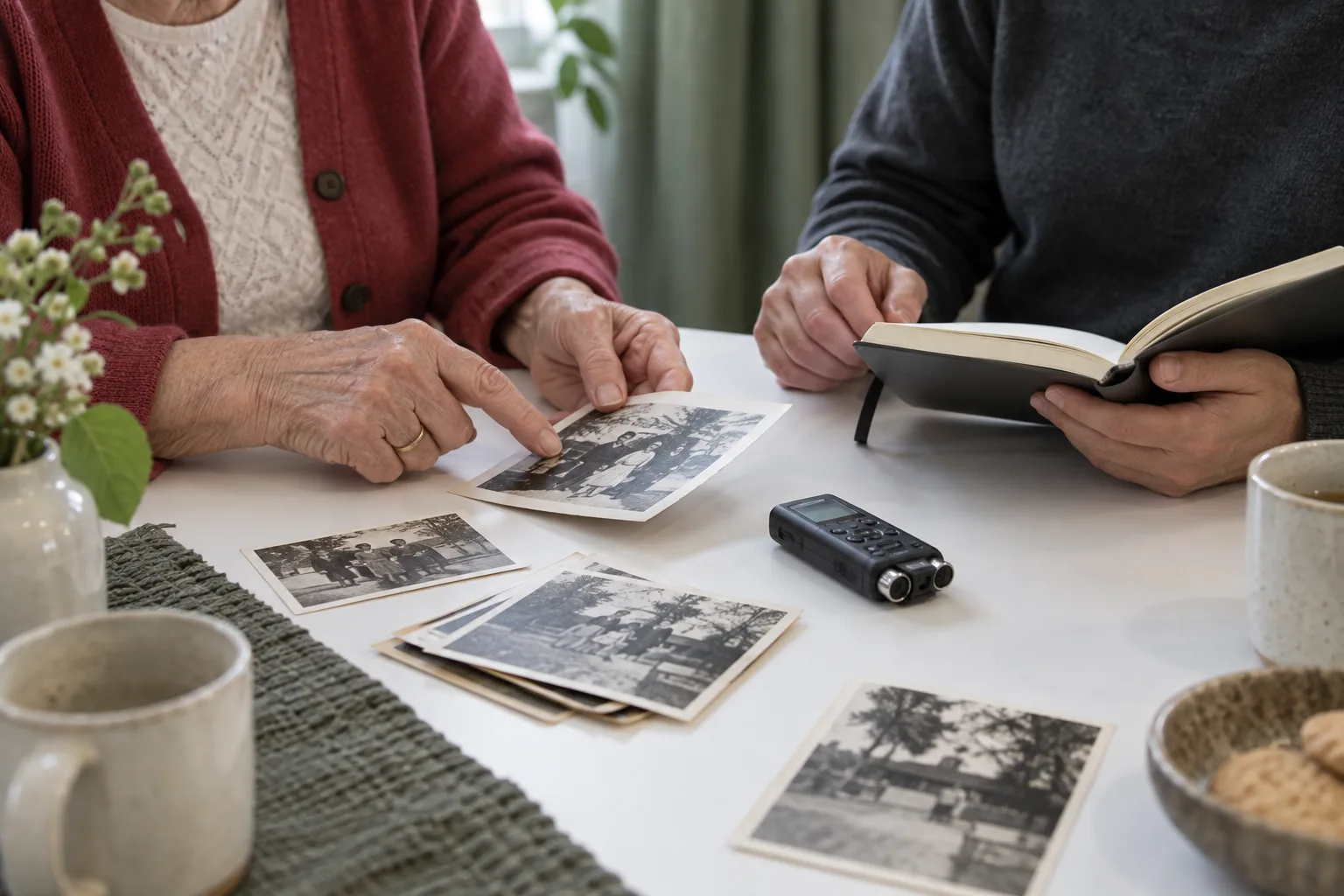
To record an oral history interview with a grandparent, explain your project, prepare reference materials, and ask open-ended questions in a quiet room. Use a smartphone or audio equipment to save the conversation. The narrator may decline to answer questions or stop the recording at any time (https://siarchives.si.edu/history/how-do-oral-history).
Gaining consent and preparing reference materials
Explain the project and its intended use so your grandparent understands the context (https://siarchives.si.edu/history/how-do-oral-history). Make it clear they have the right to refuse questions or stop recording (https://siarchives.si.edu/history/how-do-oral-history).
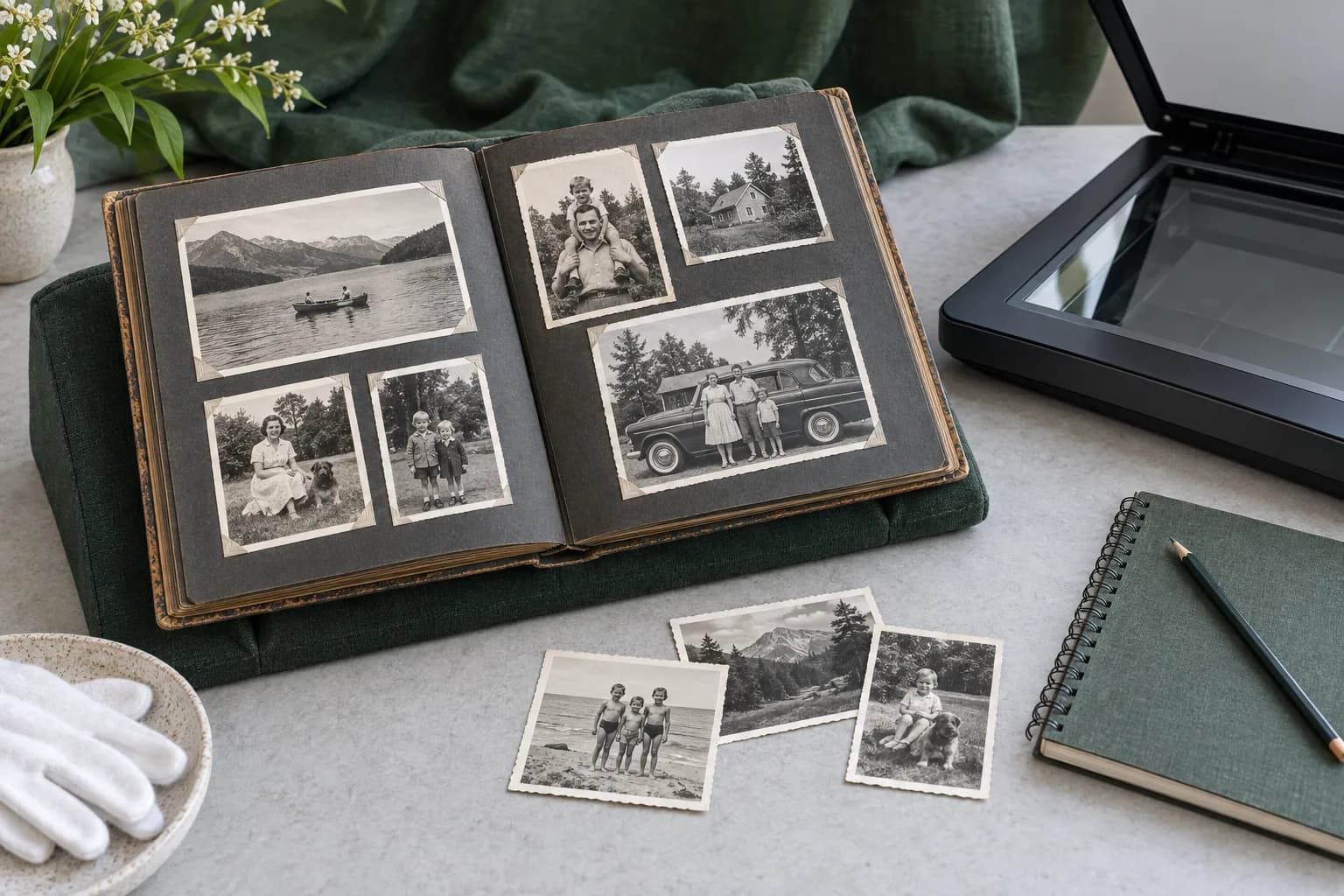
Gather a chronology of events, a list of names, and photographs for reference (https://siarchives.si.edu/history/how-do-oral-history). If you need to prepare physical prints first, review how to digitize photos in an old family album as a starting point.
Setting up the recording environment
Select a quiet space for the interview (https://siarchives.si.edu/history/how-do-oral-history). Test recording levels beforehand so voices register clearly (https://siarchives.si.edu/history/how-do-oral-history).
A smartphone can record audio as an MP3 file (https://siarchives.si.edu/history/how-do-oral-history). An uncompressed WAV file is preferred if your equipment offers that option (https://siarchives.si.edu/history/how-do-oral-history).
Structuring effective questions
Ask questions one at a time, making sure they are open-ended (https://siarchives.si.edu/history/how-do-oral-history). Avoid leading questions that prompt a specific response (https://siarchives.si.edu/history/how-do-oral-history).
Focus on first-person recollections rather than general historical facts (https://siarchives.si.edu/history/how-do-oral-history). You can ask about childhood homes, touching on furnishings, specific rooms, or moving to a new neighborhood (https://siarchives.si.edu/history/how-do-oral-history). You can also integrate visual prompts into this step by learning how to record the story behind a family photo.
Managing the conversation flow
Leave natural pauses after you ask a question (https://siarchives.si.edu/history/how-do-oral-history). Give your grandparent time to think, and avoid talking over their answers (https://siarchives.si.edu/history/how-do-oral-history).
Use follow-up questions to explore daily routines. Food-history subjects include meals, who cooked, and who helped afterward (https://siarchives.si.edu/history/how-do-oral-history). Work-history subjects cover first jobs, typical daily tasks, or influential mentors (https://siarchives.si.edu/history/how-do-oral-history).
Preserving and documenting the audio files
After the interview concludes, copy your files from the recorder (https://siarchives.si.edu/history/how-do-oral-history).
Write an interview summary alongside a list of names and subjects discussed (https://siarchives.si.edu/history/how-do-oral-history). This documentation helps identify the recording later. For formatting suggestions, read how to write a summary of a family history interview.