4 min read
Display Old Family Photos Without Damaging Them
Frame high-quality copies while storing originals safely. If displaying an original, use UV-filtering glass, spacer mats, and keep it out of bright light.
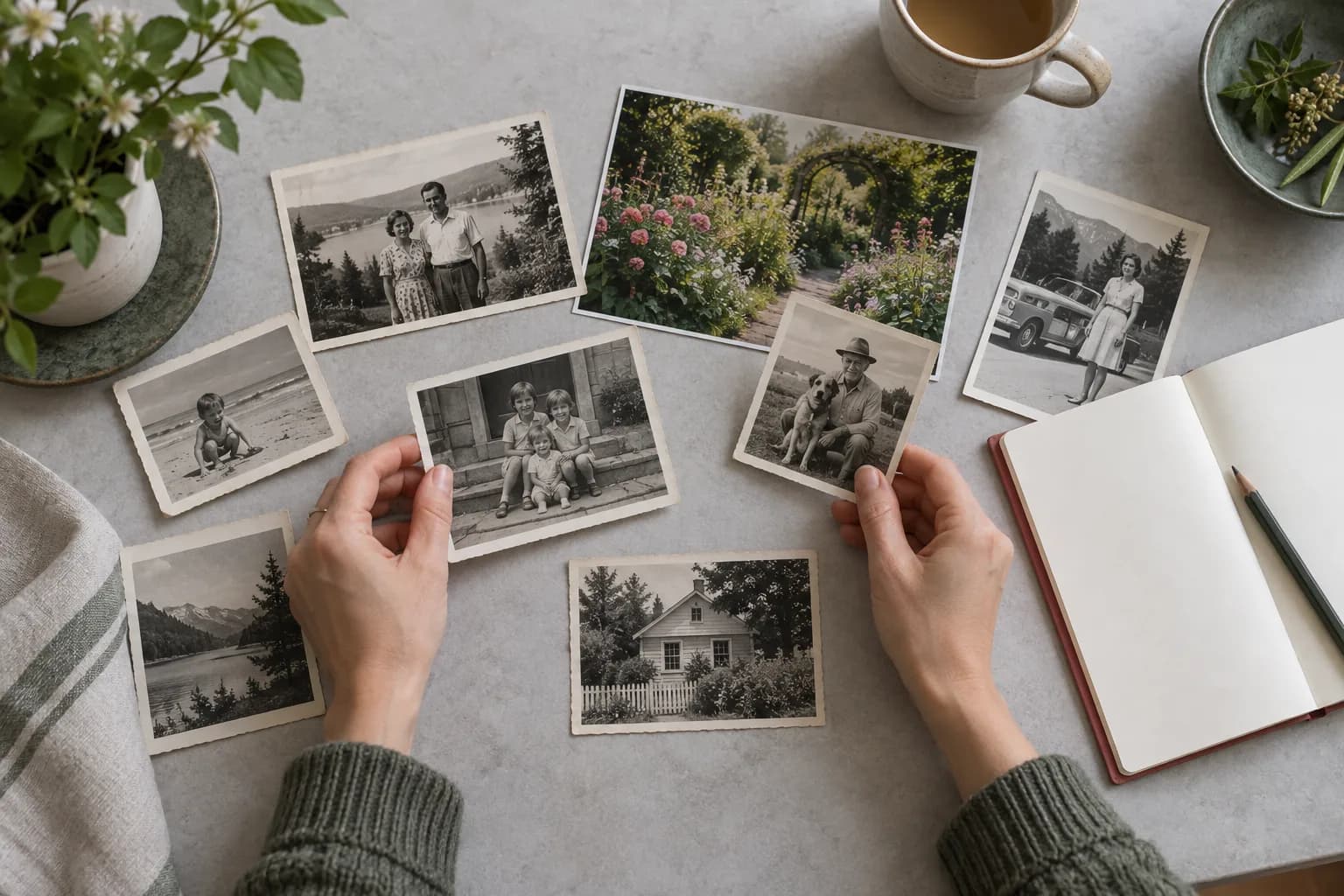
Displaying copies while storing originals offers the best protection from display light (https://www.archives.gov/preservation/family-archives/displaying). If you must display a physical original, frame it using ultraviolet-filtering glazing and a window mat to keep the glass away from the surface, and limit the intensity and duration of light reaching the piece.
The safest method for family archives
To protect historical prints, displaying copies while keeping originals put away provides the safest long-term outcome. Both visible and ultraviolet light can alter or fade originals (https://www.archives.gov/preservation/family-archives/displaying). Scanning your physical images and printing modern reproductions allows families to put a photograph on the wall without risking an irreplaceable artifact.
If you decide to handle this route, knowing how big you can print an old photograph will dictate the size of the frames you buy. Once the reproductions are framed, you can focus on how to properly store old photo albums so the primary artifacts remain in a dark, secure environment.
| Display method | Protection level | Framing requirements |
|---|---|---|
| Displaying a copy | Offers the best protection from display light | Standard frames are acceptable |
| Displaying an original | Visible and ultraviolet light can alter or fade originals | Requires ultraviolet-filtering glazing and mat board passing the Photographic Activity Test |
Choosing between aesthetics and narrative
When selecting what goes on the wall, the photograph you would frame and the photograph you would tell someone about are usually not the same one, and choosing between them is the real decision. A striking, well-composed portrait makes an excellent physical object for a wall display. A blurry but historically significant snapshot might hold a deeper family history.
You currently have to pick. The one that makes the better object goes on the wall; the other belongs in the story, where it still reaches whoever scans the print. For example, a baby holding a slice of pizza the size of her torso is the one you would frame. Oklahoma as the last green hole is the one you would tell someone about. You can record the story behind a family photo for the image you keep off the wall, but watch what is lost either way when you make this division.
Filtering and controlling light exposure
If displaying an original is necessary, ultraviolet-filtering glazing is recommended for the frame (https://www.archives.gov/preservation/family-archives/displaying). Homeowners should take care to limit the intensity and duration of light reaching an original (https://www.archives.gov/preservation/family-archives/displaying).
As a procedural suggestion, avoid hanging vintage prints opposite sunny windows or under harsh, direct artificial spotlights to limit the intensity of light in a room.
Preventing surface damage within the frame
A photograph should not sit directly against the glass or acrylic covering it inside the frame. A window mat or spacers should keep glazing away from the surface (https://www.archives.gov/preservation/family-archives/displaying).
When you assemble the frame, verify that this physical gap exists across the entire surface of the print. The separation acts as a physical barrier to keep the front of the photograph isolated from the covering.
Selecting chemically safe framing materials
To support long-term preservation, mat board for photographs should pass the Photographic Activity Test (https://www.archives.gov/preservation/family-archives/displaying).
If you plan to scan old family photos for printing instead of framing originals, the chemical safety of the framing materials is less critical because you can print another copy. For historical prints, verifying that the mat board clears this standard is a required step before sealing the frame.