3 min read
How to Share a Private Family Interview
Determine permissions for sharing a family interview by securing informed consent, setting access restrictions, and signing a legal release form.
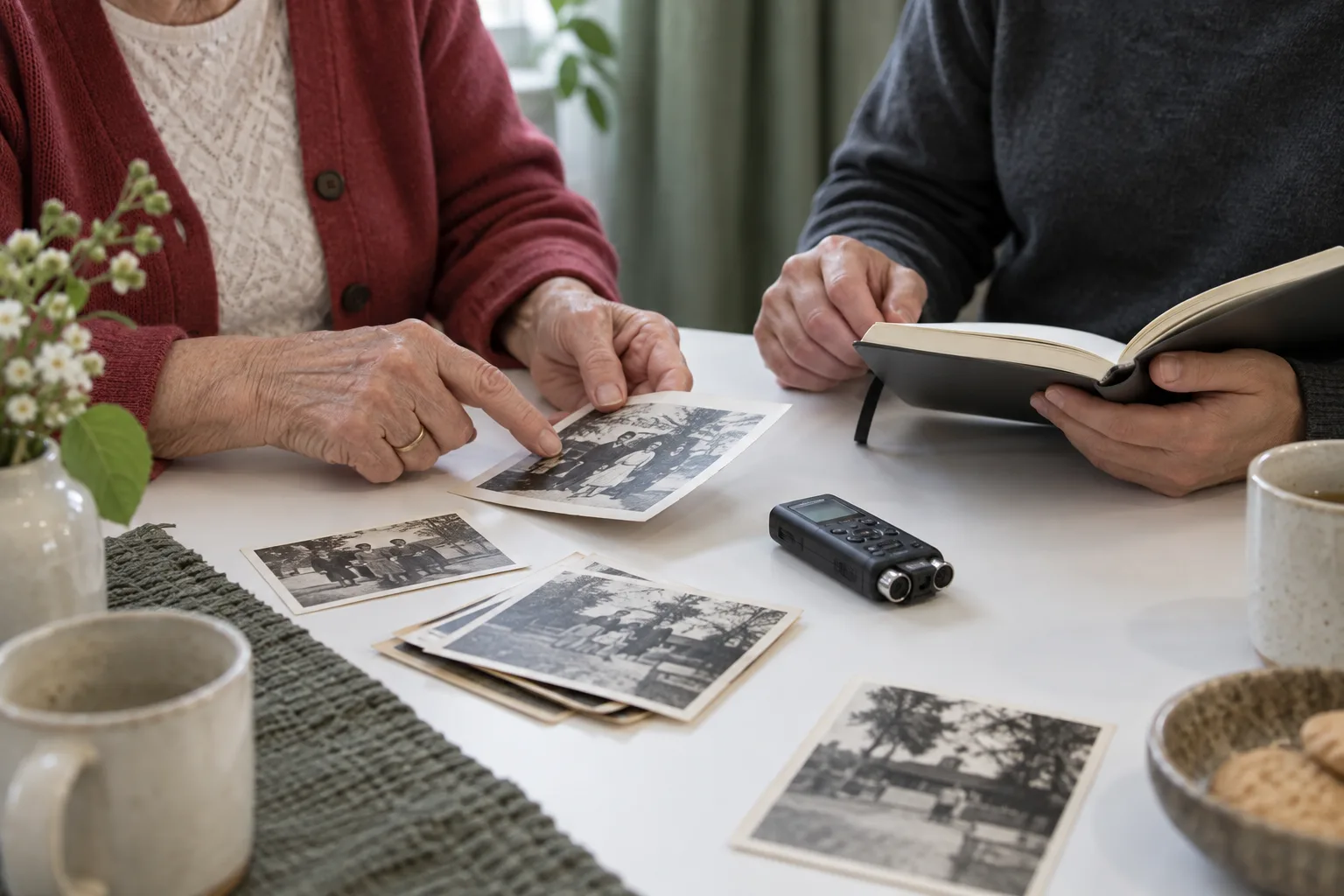
Sharing a private family interview involves clarifying access boundaries and maintaining an open dialogue with the narrator before releasing any recordings. To handle permissions appropriately, the process requires transparency, ongoing consent, engagement, and open discussion among all parties from your first encounter through the creation of the final end products (Informed Consent).
Maintaining transparency and informed consent
To help manage permissions, you can use an agreement that documents, either verbally or in writing, that the narrator was given all the information necessary to come to a decision about participating in the project (Informed Consent). Be aware that informed consent agreements do not deal with or cover copyright (Informed Consent).
Discussing restrictions and narrator agreements
During the pre-interview phase, interviewers should clearly explain to the narrator that they have the right to restrict access to the interview, refuse to discuss certain subjects, and, under certain circumstances, choose a pseudonym (Oral History Best Practices). The interviewer must respect these rights and conduct the interview according to any prior agreements made with the narrator (Oral History Best Practices).
It is a helpful practice to share expectations regarding the overall timeline of the project (Oral History Best Practices). At this stage, develop appropriate forms to document the overall process and any related agreements (Oral History Best Practices). When possible, you should provide the narrator with an opportunity to approve the oral history before it is released to the public (Oral History Best Practices).
Securing releases and managing access requests
Ideally, when the interview is completed, the interviewer should secure a signed legal release form and follow the policy guidelines of any partnering repository, if relevant (Oral History Best Practices). Those charged with preserving and providing access to the interviews should evaluate these documents and make a good faith effort to obtain consent or release forms if they do not exist (Oral History Best Practices).
You should honor stipulations from prior agreements regarding methods of distribution and access restrictions to the greatest extent possible (Oral History Best Practices). Take all practicable steps to abide by the narrator's restrictions, while simultaneously making it clear to them that certain legal challenges, such as subpoenas or open-record requests, may make some restrictions unenforceable (Oral History Best Practices). You should also be prepared to provide timely access to the material, with consideration for the expectations of narrators or project partners (Oral History Best Practices). Finally, when possible, consult the project participants on how best to describe the materials for public access and use (Oral History Best Practices).